Jetson T3000 Expands Compute Options for Embodied AI Robotics
In edge AI deployment, the Jetson Orin series addresses fundamental to moderate inference workloads. As model complexity and sensor counts scale up in medical edge inference and industrial visual inspection scenarios, Orin's compute capacity becomes a limiting factor. The Jetson Thor T5000 delivers ample performance, but its 140W power consumption and 128GB memory configuration exceed the requirements of most deployment environments.
NVIDIA's newly released Jetson T2000 and T3000 fill this gap between Orin and T5000. The Jetson T3000 achieves approximately 90% of the T5000's inference performance at roughly half the power consumption, while the Jetson T2000 brings the Thor architecture's entry-level power down to 40W.
Jetson T3000: 90% of T5000 Inference Performance at Half the Power
The key advantage of the Jetson T3000 is energy efficiency: at approximately half the form factor and power consumption of the Jetson T5000, it delivers about 90% of the T5000's inference performance across LLM, VLM, VLA, and WFM workloads. Scenarios such as large-scale humanoid robot deployment and multi-sensor fusion in autonomous systems were previously constrained by the T5000's power and cost. The T3000 meaningfully improves deployment feasibility for these applications.
In terms of specifications, the Jetson T3000 features a Blackwell architecture GPU, delivering 865 FP4 TFLOPS of compute, with 32GB of LPDDR5X memory and 273 GB/s memory bandwidth, at 70W. Compared to the Jetson T5000's 140W and 128GB configuration, the T3000 halves the form factor and power consumption while reducing inference performance by only about 10%. The T3000's 32GB memory configuration, compared to the T5000's 128GB, can significantly lower hardware costs in the current high memory pricing environment.
Jetson T2000: Thor Architecture Entry Point at 40W
The Jetson T2000 is also based on the Blackwell architecture, providing 400 FP4 TFLOPS of compute and 16GB of LPDDR5X memory at just 40W. Compared to the Jetson Orin NX (157 TOPS, INT8) at the same power tier, the Jetson T2000 represents a significant increase in AI compute capability, making it suitable for visual AI agents, autonomous mobile robots, robotic arms, and other power-sensitive applications that require stronger inference performance.
Jetson Agent Skills: Accelerated Software Stack Optimization and Memory Savings
Released alongside the Jetson T2000 and T3000 hardware is Jetson Agent Skills. Jetson Agent Skills can reduce software stack optimization cycles from weeks to days while lowering memory usage.
This tool supports the full Jetson portfolio, including both Jetson Thor and Jetson Orin, enabling developers to run more complex workloads on lower memory configurations.
A More Complete Jetson Compute Gradient
The addition of the Jetson T3000 and T2000 creates a more complete compute gradient across the Jetson product line, spanning from 25W to 140W.

The NVIDIA Jetson AGX Thor Developer Kit now supports T3000 simulation mode, allowing developers to begin design verification immediately. T2000 simulation mode will be available in a subsequent release.
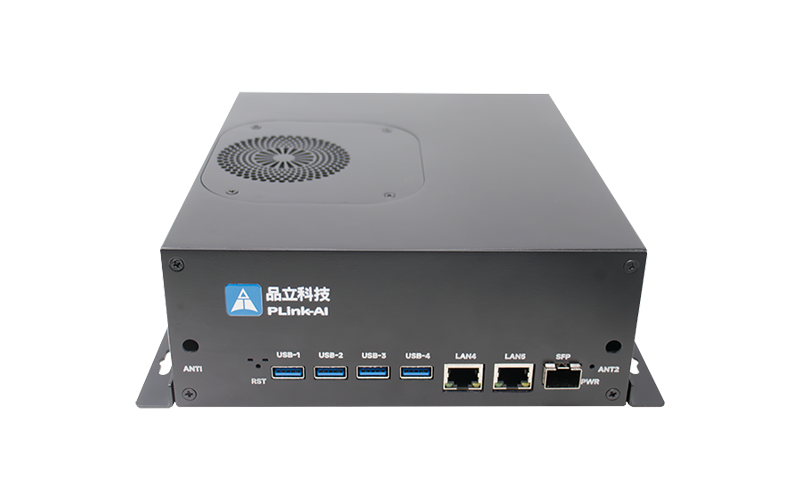
The T2000 and T3000 modules are expected to be available in Q1 2027. PLink will simultaneously launch Edge AI Computing Devices powered by the T2000 and T3000, continuing to provide customers with full-lifecycle support from solution selection to on-site deployment.
For inquiries regarding T2000/T3000 solution support and migration services, please contact us.